

Kratom is often marketed as a natural supplement, which can make it seem safer than it is. Regular use can lead to dependence and withdrawal symptoms, while concentrated 7-OH products pose even greater risks. America’s Poison Centers warns that these products can cause serious symptoms, including seizures, trouble breathing, and loss of consciousness. Being sold in a store does not establish that a product is safe.
Kratom may have started as a way to manage pain, feel more energetic, or get through a difficult day. Perhaps someone recommended it as a natural alternative. Perhaps you were trying to avoid opiates and believed you had found something less risky.
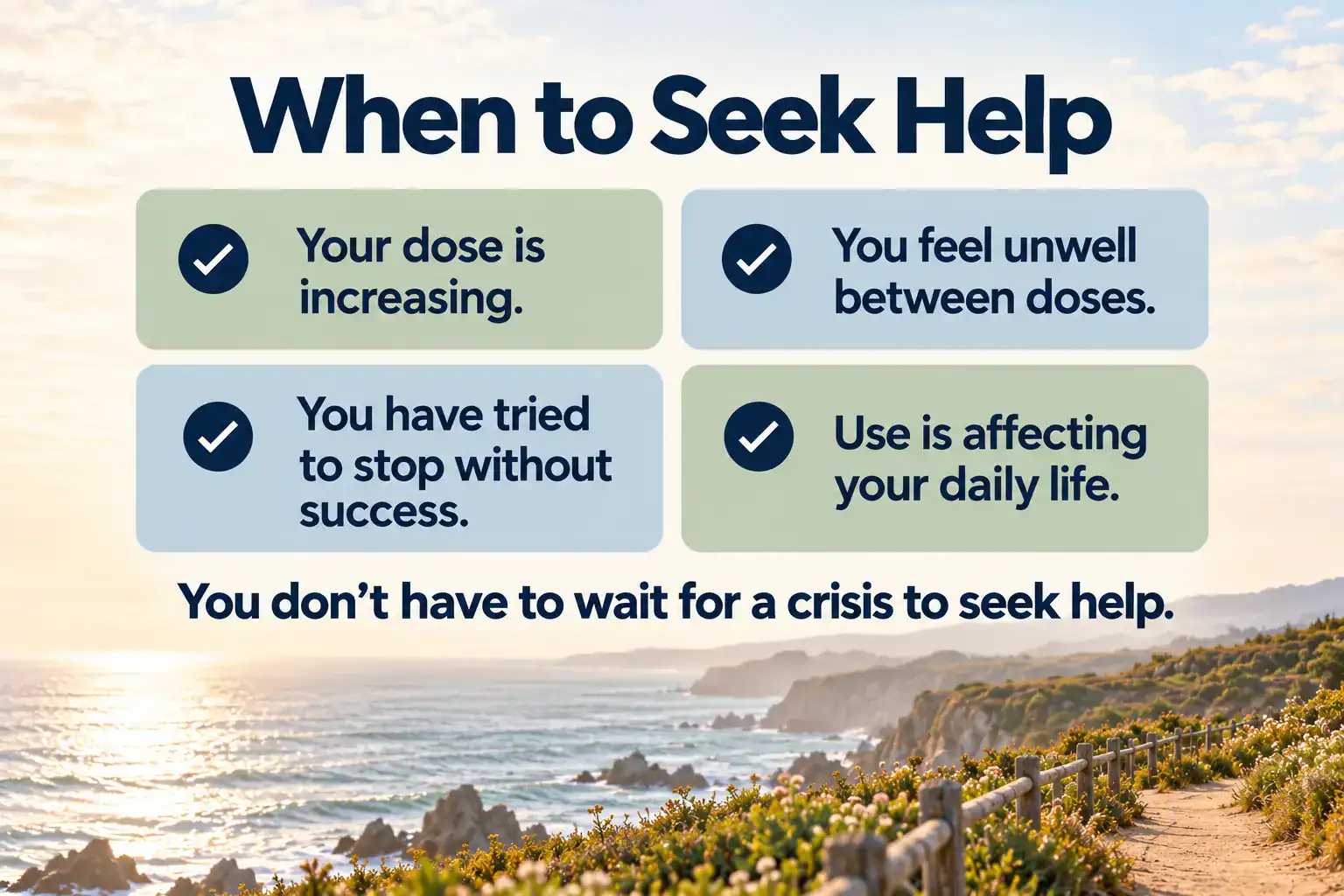
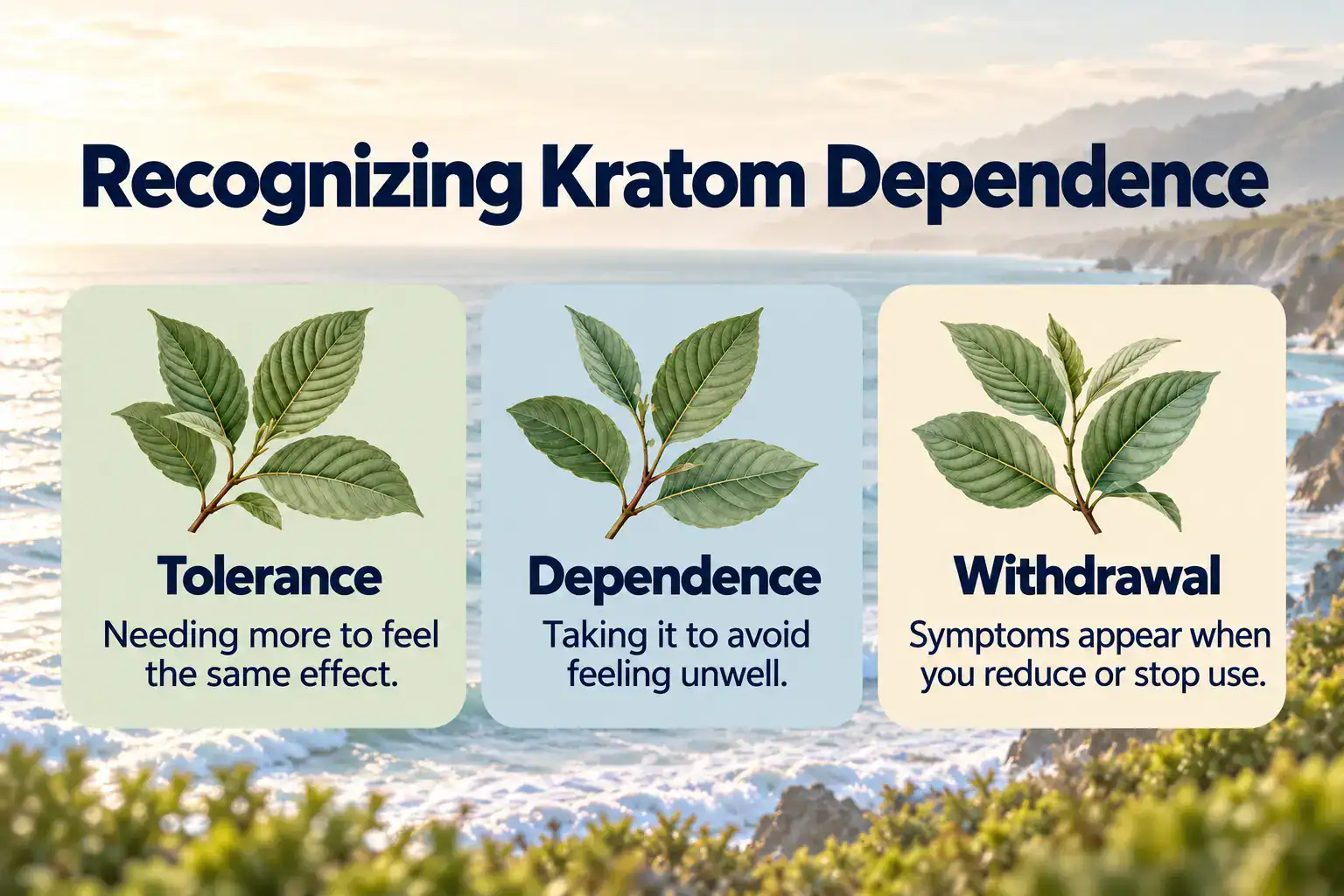
If you need larger amounts to get the same effect, take kratom to avoid feeling sick, or have repeatedly tried to stop without success, those changes deserve attention. A professional evaluation can help you understand what is happening and what support makes sense.
You do not need to wait until use becomes a crisis to seek help.
What Is Kratom
Kratom comes from the leaves of Mitragyna speciosa, a tree native to Southeast Asia. Traditionally, people have chewed the leaves or prepared them as tea. Products marketed as kratom also come in powders, capsules, drinks, and concentrated extracts.
Its compounds include mitragynine and 7-hydroxymitragynine, often called 7-OH. These interact with opioid receptors in the brain, although kratom has additional effects and is not identical to a prescription opioid. People report both stimulant-like effects, such as greater alertness, and opioid-like effects, such as relaxation and pain relief.
A plant origin does not tell you how strongly a product will affect you. Neither does the size of the bottle or the word “wellness” on the label.
Why People Use Kratom
People report using kratom for pain, fatigue, anxiety, low mood, and opioid withdrawal. Some report relief, especially when they have struggled to find affordable care or effective treatment for their symptoms.
Those experiences should be taken seriously. They also need to be separated from claims that kratom is a proven medical treatment. Research remains limited, and there are no FDA-approved kratom treatments for pain, anxiety, opioid use disorder, or any other condition.
Understanding why you started using kratom is an important part of treatment. If you were looking for relief from pain, anxiety, or other symptoms, your care plan should address those concerns and help you explore safer ways to manage them.
Kratom Extracts and Concentrated 7-OH Are Different Products
Traditional kratom leaf and products with added or enhanced 7-OH should not be treated as interchangeable. Naturally occurring 7-OH is a minor component of the leaf. Concentrated products can deliver substantially different exposure.
The FDA describes enhanced 7-OH products as potent opioid products and warns consumers to avoid them. Reported harms include addiction, seizures, and withdrawal symptoms.
Not every kratom extract is an enhanced 7-OH product. Still, “kratom” alone is not enough information for an assessment. A clinician needs to know whether you have been using leaf powder, an extract, or tablets or shots marketed around 7-OH.
Bring the packaging or clear photos of the label if you can. Include the ingredients, serving size, and any listed alkaloid concentrations. That gives your provider a better starting point than a product nickname.
Rising Health Incidents and Government Action
Reports of harmful kratom exposures have risen sharply. A CDC analysis found that U.S. poison centers received a record 3,434 kratom exposure reports in 2025, compared with 258 in 2015, an increase of approximately 1,200%. These are reports to poison centers, not confirmed overdoses or all kratom-related incidents nationwide.
The same analysis identified 233 kratom associated deaths reported to poison centers from 2015 through 2025. Of those deaths, 79% involved multiple substances. This does not mean kratom alone caused every death, but it reinforces the concern about combining kratom with opioids, alcohol, or sedatives.
Newer data highlights the risks of concentrated 7-OH. America’s Poison Centers reported 901 exposures during the first half of 2026, exceeding the 593 reported during all of 2025. Among reported exposures to 7-OH alone, 38.8% involved serious health problems and 20.5% resulted in hospitalization. These percentages describe reported exposure cases, not the likelihood of harm for every person who uses these products. Concentrated 7-OH and traditional kratom leaf should not be treated as interchangeable.
California has also stepped up enforcement. In October 2025, the California Department of Public Health declared foods, dietary supplements, and medical drugs containing kratom or 7-OH illegal to sell or manufacture in California. By March 2026, the state reported seizing more than $5 million worth of kratom and 7-OH products. These actions target the sale and manufacture of products for consumption.
For someone whose use is escalating, these developments are a reason to take warning signs seriously. Increasing doses, withdrawal between doses, and repeated unsuccessful attempts to stop deserve professional attention before an emergency occurs.
How Regular Use Can Lead to Dependence
Tolerance means needing more of a substance to produce an effect you previously felt with less. Physical dependence means your body has adapted to repeated exposure and develops symptoms when use is reduced or stopped. Both have been reported with kratom.
These changes can be easy to miss at first. An occasional dose becomes part of your morning routine. Later, you find yourself taking it again before work ends or keeping extra supplies nearby because running out feels uncomfortable.
Dependence and addiction are related, but they are not the same. Physical dependence alone does not establish a substance use disorder. Clinicians also consider whether use is becoming difficult to control and whether it continues despite harm.
A person may notice that they are spending more than planned, hiding use, missing responsibilities, or repeatedly returning to kratom after deciding to stop. Those patterns deserve a conversation, even if the person is still working and appears to be doing well.
What Kratom Withdrawal Can Feel Like
Kratom withdrawal can include symptoms that resemble opioid withdrawal, alongside changes in mood and energy. Reported symptoms include:
- Muscle aches and physical restlessness.
- Sweating, chills, or a runny nose.
- Nausea, stomach discomfort, or diarrhea.
- Trouble sleeping and fatigue.
- Anxiety, irritability, or low mood.
- Cravings or a strong urge to use again.
Withdrawal is not equally severe for everyone. Research on traditional kratom use often describes milder symptoms than those associated with conventional opioids, but some people experience substantial distress. Those findings should not be assumed to describe concentrated 7-OH use.
There is also no single withdrawal timeline that reliably fits every product and person. Research has documented pain and sleep difficulties during cessation, but a fixed promise about when you will feel better can be misleading.
Tell your provider when symptoms start, how they change, and what happens after another dose. If you have tried stopping before, describe that experience too. Your own pattern is useful clinical information.
When Professional Evaluation Makes Sense
You do not need to be certain that you have an addiction before asking for help. Consider an evaluation if:
- You feel sick, anxious, or unable to sleep when you skip a dose.
- You are taking it more often or moving to stronger products.
- Attempts to cut back repeatedly end in return to use.
- Buying or using kratom is affecting your finances, relationships, or work.
- You are combining it with alcohol, opioids, sedatives, or other substances.
- You are considering street drugs or counterfeit pills to manage withdrawal.
Pregnancy, significant medical conditions, and a history of opioid use disorder are additional reasons to discuss use promptly with a qualified clinician. Kratom exposure during pregnancy has been associated with withdrawal in newborns.
An evaluation is an opportunity to understand your options. It does not automatically mean you need to enter residential treatment.
What a Clinical Assessment Should Cover
A careful assessment looks beyond how many capsules or shots you take. Product strength, frequency, duration of use, and the reason you started all help explain the situation. Your provider should also ask about medications, other substances, previous withdrawal, and your physical and mental health.
Be honest about alcohol, benzodiazepines, sleep medications, and opioids. These details can change the safety plan. Symptoms attributed to kratom may overlap with another condition or with withdrawal from another substance.
Ask practical questions too. Can you safely work during treatment? Who can support you at home? How will pain or anxiety be managed? What happens if symptoms worsen after office hours?
You deserve an explanation of the recommendation, including why a particular setting is appropriate and what follow-up will look like.
Treatment Options Should Match Your Needs
There is no single treatment approach that is right for every person experiencing kratom dependence. Planning should reflect the product involved, your symptoms, other substance use, and the support available to you.
Outpatient support
For someone who is medically stable and has reliable support, outpatient care may be appropriate. Depending on the assessment, a clinician may discuss a gradual reduction plan, treatment for symptoms, counseling, and scheduled follow-up.
Avoid relying on a taper schedule posted online. A plan that assumes one product strength may not fit another, and it may overlook a medical issue that needs attention.
Medically supervised withdrawal management
More supervision may be appropriate when symptoms are difficult to manage, other substances complicate withdrawal, or the person cannot safely stabilize at home. Withdrawal management can provide monitoring and a plan for responding to symptoms.
Ask what medical support is available, how medications are evaluated, and how the program handles a change in your condition.
Residential treatment and continuing care
Residential care may be considered when someone needs a structured setting to address persistent substance use, mental health concerns, or an environment that makes recovery difficult.
Getting through withdrawal is an early step. Continuing care should help with the situations that previously led to use, whether that means pain treatment, therapy, medication management, or support rebuilding daily routines.
Can Medication Help with Kratom Dependence
A clinician may consider medication to manage specific withdrawal symptoms. Published case reports also describe buprenorphine, often combined with naloxone, for some people with significant kratom-related problems.
That evidence is promising but limited. Case reports do not establish that the medication is appropriate for everyone. Expert discussions have cautioned against automatically using opioid medications as the first treatment for kratom withdrawal, particularly in people without a history of opioid use disorder.
For someone with an existing opioid use disorder, the decision may be different. The assessment should consider this diagnosis and the risk of returning to opioids, alongside the current kratom use.
Medication selection and timing require a qualified prescriber. Do not borrow Suboxone, use leftover prescriptions, or change prescribed addiction medication on your own.
Other Health Risks Deserve Attention
Dependence is not the only concern. Kratom has been associated with nausea, constipation, dizziness, and, less commonly, seizures and liver problems. Some products contain bacteria or heavy metals. Combining kratom with other drugs has been linked to serious adverse effects, and interactions remain incompletely understood.
Seek urgent medical evaluation for symptoms such as yellowing skin or eyes, severe vomiting, or an inability to keep fluids down. Do not assume every new symptom is ordinary withdrawal.
If someone has a seizure, cannot be awakened, or has slowed or stopped breathing, call 911. If opioid overdose is suspected, administer naloxone if available and follow emergency instructions. Stay with the person while help is coming. Naloxone does not replace emergency care.
Helping Someone You Care About
A person struggling with kratom may feel embarrassed because they believed they were choosing something safe. An accusation can make that conversation harder. Start with what you have noticed and leave room for them to explain.
Offer practical support, such as helping gather product labels or attending an appointment. Avoid demanding that they stop immediately without understanding their symptoms and other substance use.
You do not have to solve the problem for them. You can help make the next step feel possible.
You Can Ask for Help Before Things Get Worse
If you are taking kratom to avoid withdrawal, increasing your dose, or repeatedly struggling to stop, seek a professional evaluation. These are warning signs that deserve attention now.
Getting help early gives you an opportunity to address withdrawal, understand your treatment options, and manage the pain or anxiety that may have led to use. You do not have to wait for an emergency to take the next step.
At Laguna Beach Recovery, our team can help you explore kratom and 7-OH treatment options and determine whether detoxification or residential care may be appropriate. You can begin with questions, even if you are still unsure what you need.
Having trouble cutting back on kratom or concentrated 7-OH products? Laguna Beach Recovery can help you understand treatment options and whether medically supervised withdrawal management or residential care may be appropriate.
Call us or use our confidential insurance verification form to take the next step.
National Center for Complementary and Integrative Health. Kratom.
https://www.nccih.nih.gov/health/kratom
U.S. Food and Drug Administration. FDA and Kratom.
https://www.fda.gov/news-events/public-health-focus/fda-and-kratom
NIH News in Health. Is Kratom Safe.
https://newsinhealth.nih.gov/2022/08/kratom-safe
U.S. Food and Drug Administration. Products Containing 7-OH Can Cause Serious Harm.
https://www.fda.gov/consumers/consumer-updates/products-containing-7-oh-can-cause-serious-harm
Smith and colleagues 2022. Assessment of Kratom Use Disorder and Withdrawal Among an Online Convenience Sample of US Adults.
https://pubmed.ncbi.nlm.nih.gov/35220331/
Henningfield and colleagues 2023. Kratom withdrawal Discussions and conclusions of a scientific expert forum.
https://pmc.ncbi.nlm.nih.gov/articles/PMC10311168/
Singh and colleagues 2018. Severity of Pain and Sleep Problems during Kratom Cessation among Regular Kratom Users.
https://pubmed.ncbi.nlm.nih.gov/29558272/
Arhin and colleagues 2023. Successful Management of Kratom Use Disorder With Buprenorphine and Naloxone.
https://pmc.ncbi.nlm.nih.gov/articles/PMC10386870/
Centers for Disease Control and Prevention. 5 Things to Know About Naloxone.
https://www.cdc.gov/overdose-prevention/reversing-overdose/about-naloxone.html
Towers and colleagues 2026. Increases in Kratom-Related Reports to Poison Centers National Poison Data System, United States, 2015-2025. CDC MMWR. Published March 26, 2026.
https://www.cdc.gov/mmwr/volumes/75/wr/mm7511a1.htm
America’s Poison Centers. Health Advisory Serious Illnesses Associated with Kratom and 7-OH Products. Published July 8, 2026.
https://poisoncenters.org/news-alerts/13651143
Office of Governor Gavin Newsom. Governor Newsom announces 95% compliance with prohibition of illegal kratom products. Published March 3, 2026.
https://www.gov.ca.gov/2026/03/03/governor-newsom-announces-95-compliance-with-prohibition-of-illegal-kratom-products/
